🎯 The Power of Purpose: Why "Start With Why" Is a Transformational Approach in Business and Leadership
In an era defined by information overload, fast-paced innovation, and hyper-competition, the most successful individuals and organizations are not those who simply provide better products or services—they are the ones who lead with purpose.
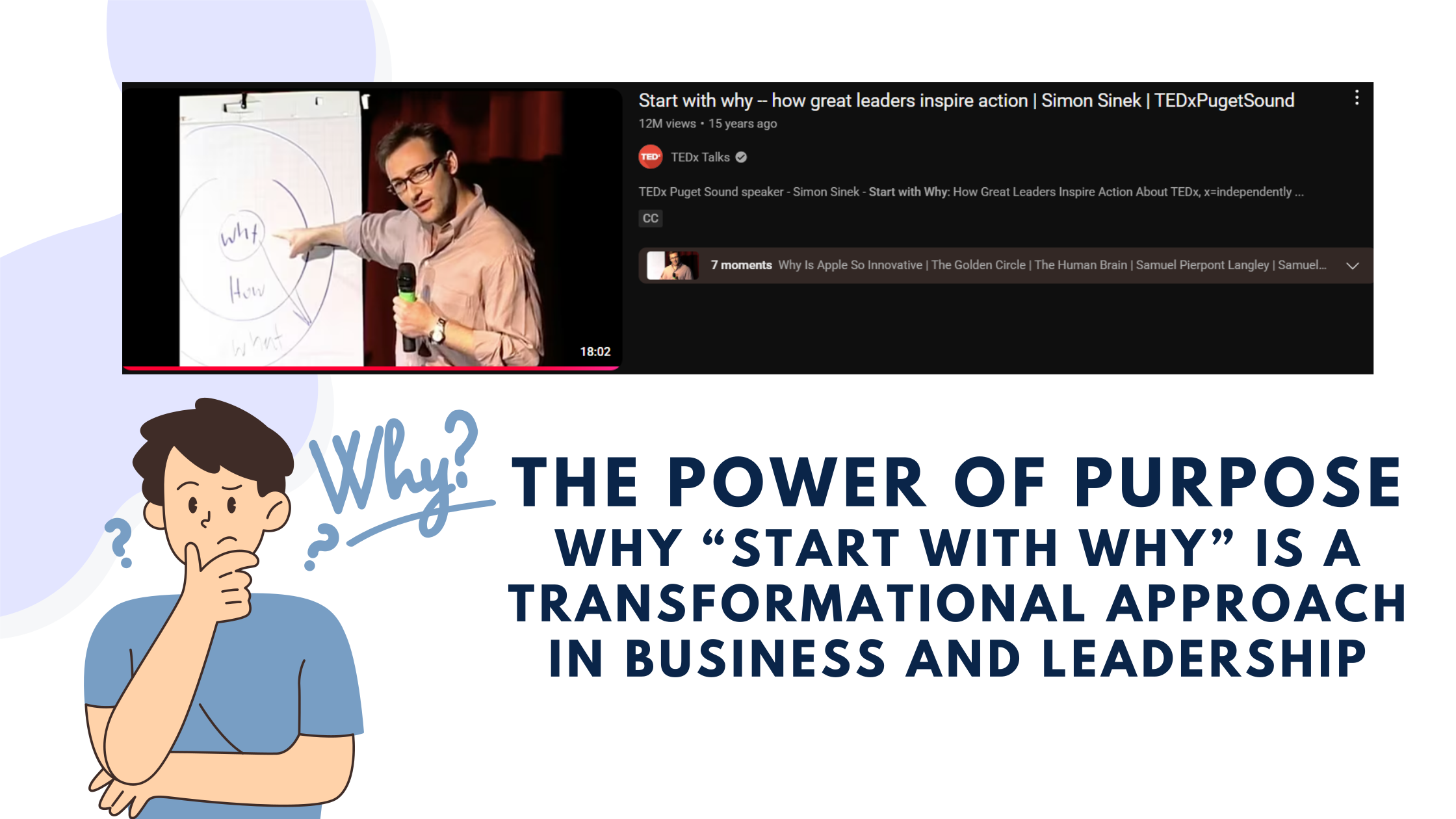
This core idea lies at the heart of Simon Sinek's influential philosophy: Start With Why. Popularized through his bestselling book Start With Why (2009) and his widely viewed TED Talk, "How Great Leaders Inspire Action"—now among the most watched of all time—Sinek presents a compelling case for shifting the way we think, act, and communicate.
This article explores why beginning with "why" is not just a branding or leadership tool, but a deeply transformational mindset that fosters clarity, loyalty, and lasting impact.
Understanding the "Why" Concept
At its essence, "Start With Why" challenges the conventional logic of communication. Sinek introduces the Golden Circle model, composed of three concentric circles:
- Why – The core belief or purpose behind what you do
- How – The process or values that guide how you bring it to life
- What – The product, service, or result you offer
Most people and organizations communicate from the outside in—starting with what they do, then how, and rarely, if ever, why. However, those who truly inspire act in the reverse order: they start with why.
"People don't buy what you do, they buy why you do it." — Simon Sinek, TED Talk, 2009
Why Starting With Why Works
1. It Builds Authentic Connection and Trust
Today's consumers and audiences are more discerning than ever. They seek alignment with values, not just features or benefits. When an organization leads with a clear "why," it forms an emotional connection that transcends price or convenience.
This is not theory—it's neuroscience. Sinek explains that decisions are driven by the limbic brain, responsible for feelings like trust and loyalty. This part of the brain does not understand language or logic—it understands emotion and meaning. Leading with "why" speaks directly to this decision-making center.
Brands like Apple, Patagonia, and Tesla thrive not solely because of innovation, but because their mission resonates with the core beliefs of their audiences.
2. It Inspires Loyalty, Not Just Transactions
In the digital economy, customer acquisition is hard—but customer retention is harder. Organizations that communicate a compelling "why" often inspire a tribe of loyal advocates, not just customers.
These individuals are not just consumers of a product—they are believers in a cause. Consider how Harley-Davidson cultivates lifelong community around freedom and identity—not motorcycles alone.
In leadership, the same principle applies. Employees are more engaged and committed when they believe in the deeper reason behind their work. According to a 2022 Deloitte report, purpose-driven companies see higher employee satisfaction, retention, and performance.
3. It Provides Strategic Clarity
A well-defined "why" serves as a north star in decision-making. When opportunities, challenges, or pivots arise, returning to your "why" ensures consistency and alignment.
Startups, for example, may pivot their products multiple times—but those that are anchored in a strong "why" tend to navigate change without losing their identity.
This clarity also prevents "mission drift," where an organization's activities slowly diverge from its original intent, often leading to confusion, inefficiency, or reputational decline.
4. It Drives Long-Term Impact
Organizations and individuals that lead with purpose create value beyond profits. Their success is measured not only in market share but in meaningful contribution—to customers, society, and future generations.
Martin Luther King Jr. did not give a speech titled "I Have a Plan." He said, "I Have a Dream." That dream—his "why"—mobilized a movement.
Whether you're a solopreneur, a nonprofit, a tech startup, or a creative professional, your impact grows exponentially when people know what you stand for.
Real-World Applications
The "Start With Why" framework is not limited to leadership theory. It can be applied practically in:
- Branding and Marketing: Craft messaging that resonates with customer beliefs
- Product Development: Ensure that innovations align with core purpose
- Hiring and Culture Building: Attract talent aligned with your mission
- Personal Branding: Build trust by sharing your personal "why" before your qualifications
Conclusion: Start With Why—Lead With Purpose
In a noisy world, clarity cuts through. Purpose attracts. Meaning sustains. That's the power of starting with why.
Simon Sinek's insights challenge us to reframe how we present ourselves, how we build teams, and how we design organizations. Whether you are building a brand, leading a team, or shaping your own career—begin with a clear answer to one question:
"Why do I do what I do?"
When you find your why, everything else—your what and how—will fall into place.
References
- Sinek, Simon. Start With Why: How Great Leaders Inspire Everyone to Take Action. Portfolio/Penguin, 2009.
- Sinek, Simon. How Great Leaders Inspire Action. TEDxPuget Sound, 2009.
- Deloitte Insights. Purpose-driven companies and performance. 2022.
✍️ Written in VS Code. Compiled with caffeine. Deployed from the heart.